April arrived with a quiet sense of surprise. A month that usually marks the peak of the rainy season instead unfolded under largely dry skies, gently transforming the landscape. The once muddy tracks quickly became firm and easy to navigate, while the vibrant green grasslands began to fade into softer shades of gold and brown. The Grumeti River, which only last month was overflowing its banks, dropped significantly, its waters running low and clear revealing a rarely seen side of the river for this time of year. With nearly three weeks passing without rainfall, the shift was noticed by all. Yet, just as the dryness began to define the month, the rain returned in the final days of April. Over the last five days, steady showers have refreshed the land, bringing a subtle but welcome revival. The dust has settled, the air carries a renewed freshness, and hints of green are beginning to reappear across the plains.
Within this contrast from unseasonal dryness to a gentle resurgence of rain, the ecosystem continues to show its resilience. Wildlife moves and adapts with ease, adjusting to shifting conditions through instincts shaped over generations.
Here’s a sightings snapshot for April:
Lions
April offered a unique and rewarding chapter for lion sightings, shaped by the month’s weather and the shifting tones of the landscape. As the grass began to turn from green to gold and brown, it created exceptional camouflage, blending almost perfectly with the lions’ coats and making each sighting feel even more special. Despite this, encounters were more frequent than the previous month, with lions often seen moving across the open plains especially during the cooler hours of the day. As temperatures rose, they would melt into the tall, dry grass, challenging the eye but adding a sense of excitement to every discovery. Over the course of the month, we were fortunate to observe six different prides across the reserve.
- The Colobus pride was observed on the eastern side of Grumeti river near the colobus crossing
- Kawanga Pride members were seen on the open plain west of Kawanga ranger post.
- Butamtam Pride was observed moving around Pundamilia, Nyati plain, Manangai and Chui drainages during the month.
- Momukomule Pride was seen along uwanja wa ndege and Kombre drainage.
- Sabora Pride stayed around Nyasirori for the whole month due to the availability of food around the Nyasirori area.
- Mkuyu Pride members were along Grumeti North and Ikoma drainage areas.
- There was one young nomadic male lion seen few times along Nyati plain.
Leopards
- There were two males observed having a territorial dispute along Nyasirori Dam drainage.
- The Kombre male was seen walking along Arab Camp Road.
- A beautiful female leopard was seen west of Sabora camp.
- The well-known shy male of the German Bridge area was seen near the Eagle Nest and River Road junction.
- A skittish female was seen west of Fungo and Sabora Access junction.
Cheetahs
- We saw the dominant male along Nyati plain during the month.
Elephants
April unfolded with steady, comfortable conditions for elephants, with food and water still well available across different parts of the reserve. Herds were seen in various locations, moving confidently through the grasslands now shifting into rich golden grass feeding at a consistent pace as they went. Their movements remained relaxed and unhurried, reflecting the abundance that still supported them. As each day progressed, elephants frequently made use of scattered water points and soft, muddy patches, where they cooled off and maintained their body temperature under the warm sun. These gatherings also encouraged gentle social interaction, with calves exploring, adults communicating, and groups lingering together in a calm and composed manner.
- Elephants were seen roaming the reserve in both large and small herds, Sabora open plains being the areas with the highest concentration of these giants of the wild.
Buffalos
Buffalo herds remained widely distributed across the reserve in April and were seen in many areas of the open plains. With the reduction in rainfall for the first three weeks of the month, they were often observed congregating around larger water sources such as Sasakwa Dam and other seasonal pools, particularly during mid-morning hours. These gatherings provided excellent viewing opportunities, as large herds came together to drink, displaying their strong group formations and creating impressive scenes across the landscape.
- A very large buffalo herd was observed moving across the Sasakwa plains, around Sasakwa Dam, Pundamilia, and the Old School areas.
- Another large herd was seen roaming extensively to the east, west, and north of Sabora camp.
- A medium sized herd was seen on the open plains of Nyati and around the den-site.
- A large herd was encountered along Butamtam, Fungo, and the Serengeti Road towards the Kigelia Crossing areas.
- The Albizia woodland, Kombre drainage, and marsh areas supported a very large herd moving through these habitats.
- Another herd was sighted along Gambaranyera plains, as well as the Marula and Balanitis Explore Camps areas.
- A smaller herd was observed around German Bridge, Grumeti West, and the Colobus areas, utilizing similar ranges.
Plains game
General plains game viewing in April remained rewarding. Giraffes were sighted almost daily, wandering widely across the reserve as they browsed over large areas. Meanwhile, zebras, topis, gazelles, and a few resident wildebeests were consistently observed on the short-grass plains of Nyati and the higher ground of Nyasirori. These areas continued to attract general game, offering visitors reliable and enjoyable wildlife sightings across the open landscape.
When snorting led us to a rare encounter
By Calson Luka
It was around mid-morning, and I was finishing my morning game drive. As we were heading back to Sabora Camp, I decided to take a slow drive along the Sabora drainage. This area is known for its sausage trees, and it’s often a good place to spot leopards around that time of day. As the sun gets warmer, leopards like to climb trees to rest and enjoy the cool breeze in the branches.
I drove slowly, carefully scanning the trees and the ground around them, hoping to spot one. Everything seemed calm and quiet until suddenly, I heard a snorting sound in the distance. I immediately asked the guests to stay quiet and listen carefully.
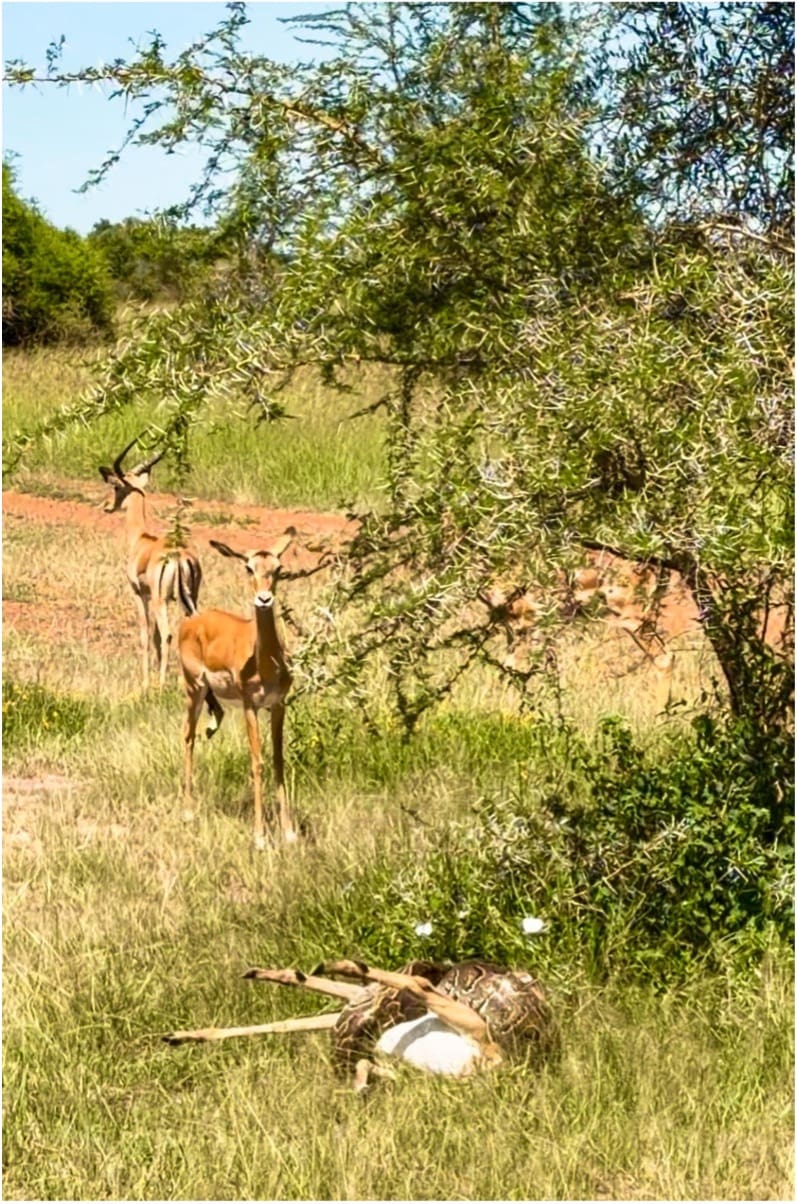
The sound was coming from a group of impalas further downstream. We moved closer, driving slowly and cautiously. Soon, we saw a small harem of impalas standing behind an acacia tree. They were all staring in one direction, clearly tense and alert, and making loud alarm calls.
I stopped the vehicle at a comfortable distance, and we all picked up our binoculars. We followed the direction of the impalas’ gaze, focusing near the base of the tree. At first, it was hard to see anything clearly. But as we adjusted our view and looked more closely, we noticed movement.
What we saw next was something truly incredible – a female impala was locked in a struggle with a large python. It was a chilling goosebump moment. Nobody spoke. We just watched in complete silence as the intense battle unfolded in front of us. The impala fought bravely, trying to break free, while the python slowly tightened its grip. The scene was dramatic and emotional, as it revealed the true intensity and reality of life in the wild.
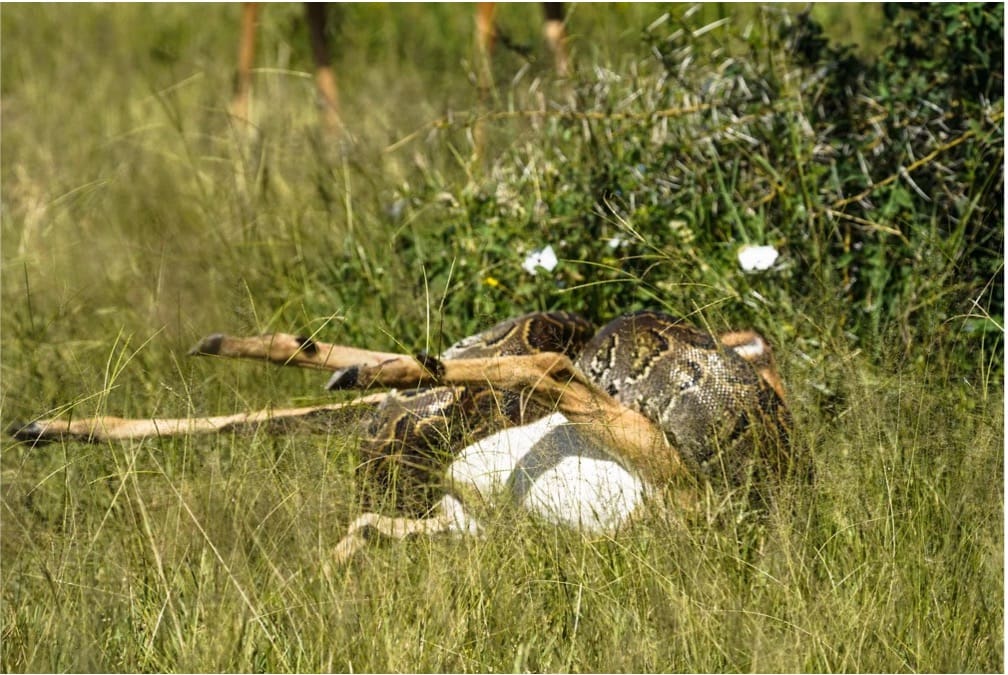
The struggle went on for about 40 minutes. It felt like time had slowed down as we watched every movement. In the end, the python managed to overpower the impala and successfully constrict it by halting its blood flow until it died.
There was a deep silence in the vehicle afterward. Everyone was processing what they had just witnessed. On our way back to the lodge, I explained to the guests how rare and special this sighting was. I have been guiding since 2008, and in all those years, I had never seen anything like it before.
It was truly an unforgettable experience – one of those rare moments in the wild that stays with you forever.
The hidden treasure of Grumeti
By Baraka Mtallo
Once you visit Grumeti Reserves, your eyes are naturally drawn to the vast plains and roaming wildlife but look closer, and a quieter, deeper beauty begins to reveal itself. Scattered across the grasslands are striking rocky outcrops, each telling a story through their colour, texture, structure, and formation. These are the hidden treasures of Grumeti.
Being close to Lake Victoria, the region holds geological evidence of a much older landscape. Calcrete formations found around the reserve suggest that this area was once influenced by ancient water systems, offering a glimpse into a time when the environment was vastly different from today.
On the western plains, sharp edged pieces of quartz can be found lying on the ground. These stones are believed to have once been used as cutting tools, hinting at early human activity and a long-standing relationship between people and this land.
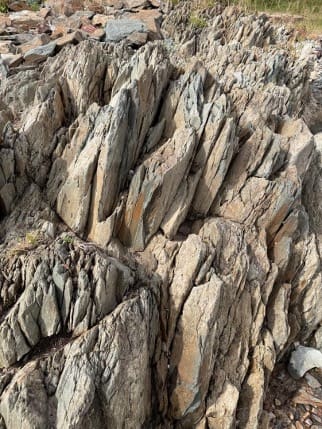
Moving into the central parts of the reserve, the geology becomes even more fascinating. Areas such as OP7, Shabaha and Ridge Hills are dominated by metamorphic rocks, ancient formations that have undergone intense heat and pressure over time. These rocks display remarkable transformations, including the formation of Ferricrete a combination of iron and calcium. Through oxidation, this process gives the rocks their rich reddish tones, painting the landscape with natural colour.
Iron, present in these rocks, plays a vital role in the ecosystem. It finds its way into the soil, into the plants, and ultimately into the animals. Every creature, in one way or another, depends on these minerals right down to the formation of red blood that sustains life.
Basalt rocks are also widespread across the reserve, from the Grumeti River through Faru to Ikorongo region. Formed through extrusive volcanic activity, these rocks shape the land in powerful ways. They create elevated vantage points for animals, enrich the soil for plant growth, and provide shelter and habitat for birds, insects, and other wildlife.
In Ikorongo areas magnificent granite outcrops stand proudly, formed deep within the Earth through internal volcanic processes millions of years ago before intensive erosion exposed them to the earth’s surface. These hard, ancient rocks support a surprising variety of life, including baboons, leopards, hyraxes, and snakes, all finding refuge among their cracks and surfaces.
The Grumeti River itself tells a geological story, carving its path along lines of weakness in sedimentary and basaltic rocks. Its flow is not random but guided by the structure of the land beneath it.
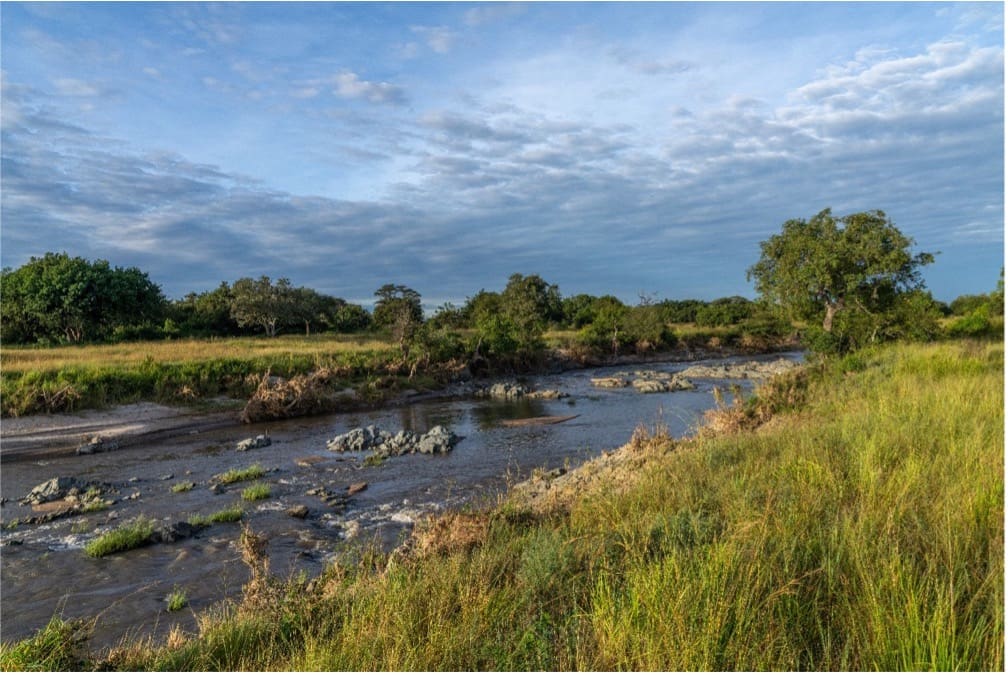
Grumeti River. Photo by Edward Kaaya
Perhaps most remarkable is how everything is connected. Elephants wallow in mineral-rich mud, feed on grasses nourished by soils derived from these rocks and even scratch against stone surfaces for relief. From the smallest insect to the largest mammal, life here is deeply tied to the geology beneath their feet.
The beauty of Grumeti is not only found in its famous predators or vast herds. It lives quietly within these rocks in the textures, colours, and stories they hold. This natural treasure, often overlooked, is a powerful reminder that the foundation of life itself lies in the land.
The living chorus of the savanna
Story by Baraka Mtallo
In the heart of the Grumeti Reserves, part of the vast and iconic Serengeti, the savanna awakens each day with a rhythm that is both timeless and alive. The sound is a living rhythm, carried on the wings of birds that announce the beginning and the end of each day.
At dawn, before the sun fully rises, the air is cool and fresh. Bird calls echo across the open plains melodious, sharp, and layered in harmony. Some whistle softly from the treetops, while others call boldly across the grasslands. This morning chorus is nature’s alarm clock, signalling life, movement, and renewal.
It is in these moments that the savanna feels most alive, as if every creature is part of a grand performance.
As evening approaches, the sounds return, but with a different tone. The heat of the day fades, and the golden light of sunset stretches across the land. Birds once again fill the air with calls. They are marking territory, communicating with mates, and preparing for the night. Their songs are rich and expressive, creating a peaceful yet powerful atmosphere that reflects the balance of life in this ecosystem.
During the heat of the day, however, the savanna grows quieter. As temperatures rise, many animals and birds retreat into the shade, conserving energy and waiting for the cooler hours. The silence is not emptiness, but a pause – a moment of rest in a land that never truly sleeps. Beneath this stillness, life continues quietly, hidden from view.
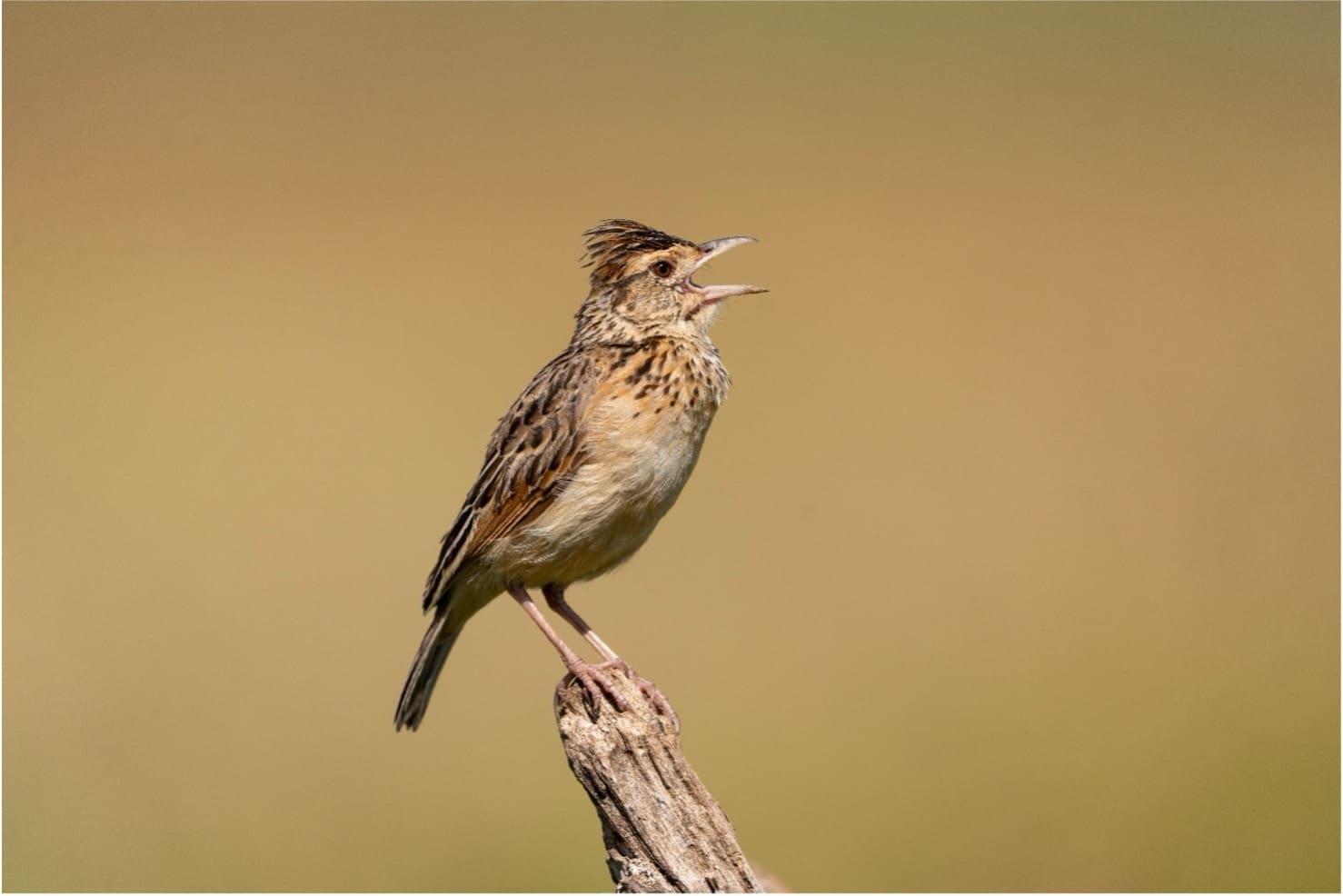
A visit to the savanna of Grumeti is always a spectacular experience. From the sight of powerful predators to the movement of mega herds, from the graceful flight of birds to the tiny but vital insects, there is always something to admire. It is more than just a landscape. It is a living, breathing, roaring, stridulating, singing world.
The sound of the savanna is a clear sign of a healthy and thriving ecosystem. It reflects the potential and resilience of this biome, reminding us of the delicate balance that sustains life. To listen to it is to experience the world’s greatest orchestra and appreciate the natural harmony that makes the savanna truly extraordinary.
Download the full report