August proved to be an outstanding month for game viewing across the reserve. The light showers at the beginning of the month refreshed the plains, drawing in large concentrations of wildlife. The short burst of green growth created ideal grazing conditions, ensuring the open areas remained active with movement throughout the month.
Topi calving dominated much of the month, with herds spreading across the plains to give birth. The sight of young calves following closely behind their mothers was common, and their presence inevitably attracted predators, adding intensity to daily sightings. Alongside the topi, zebras, gazelles, and the remaining groups of wildebeest contributed to the abundance of grazing herds.
The Mara River continued to provide dramatic scenes as migratory animals crossed throughout August. Large numbers of wildebeest and zebras braved the currents and the lurking crocodiles, ensuring a steady flow of activity along the riverbanks. By contrast, the Lamai Plains were packed with ungulates, a remarkable concentration that highlighted the abundance of the season and confirmed August as a peak month for both density and diversity of wildlife.
August sightings snapshot for Grumeti:
Lions
The reserve came alive this month as thousands of zebras, wildebeest, topis and gazelles flooded the open plains, especially the recently burnt areas, which offered fresh grazing and drew in large herds. This abundance of prey made it a thrilling time for predators like lions and other carnivores that were frequently spotted taking advantage of the feast. It was an incredibly exciting month for game viewing, with nature’s drama unfolding at every turn.
- Butamtam Pride remained anchored along the Chui Drainage area, which continues to be their chosen den-site. With 14 young cubs to protect, the pride has stayed close to home, offering regular sightings of playful youngsters.
- Kombre Pride was frequently observed around Arab Camp Hill, Twiga Road, and Uwanja wa Ndege. Occasionally this pride ventured into Butamtam Pride territory.
- Mkuyu Pride was seen along the Grumeti River, particularly east of Mbuni Hill, near German Bridge, and around Martin’s Hill, patrolling the riverine thickets and open woodlands.
- Sabora Pride was spotted near the Morum Pit, west and north of Sabora Camp, as well as along the Sabora Drainage. The pride took full advantage of the abundant prey in the Sabora areas.
- Manchira Pride roamed the grasslands east of the Manchira River, west of Bangwesi Hill, and along the Nyamamba Plain, often seen sleeping in the Grumeti riverbed during the heat of the day.
- West Pride members were seen south of Marula Explore camp, around Mbuni crossing, and along the Raho Drainage, covering wide ground patrolling their territory as well as searching for food.
Leopards
Leopard sightings were exceptional throughout August, with consistent sightings recorded across multiple areas of the reserve. From the thickets and the woodlands around Faru Faru to the open edges of Sabora Plain, these elusive cats were seen regularly, offering some of the most rewarding encounters of the month.
- A well-known young female Maridadi was seen often along Raho Drainage, Nyasirori Ranger Post and east of Sabora camp.
- A male was seen walking across the open plain south of Sasakwa Dam towards the Old School area.
- A male was seen resting in a balanites tree south of Korongo Scout Camp, offering a classic view.
- A shy female was seen along the Villas Access Road slowly walking the valley stalking impala.
- In the middle of the month, a male leopard was spotted in the evening, drinking from the water point just north of Sasakwa Lodge.
- There was a male seen with a warthog piglet along watershed areas just west of Faru Faru Lodge.
- Raho female was seen up in a balanites tree along Raho Drainage, near the Serengeti and Grumeti boundary line.
- A male was seen with a zebra kill up in a balanites tree, west of Maruru Drainage.
Cheetahs
We didn’t notice much change with the cheetahs. Although we didn’t see them every day, each sighting was incredibly exciting. In August, cheetah sightings remained consistently rare, but each encounter was a thrilling highlight.
- A female cheetah was seen twice out on the Gambaranyera Plain, offering exciting views in the wide grasslands.
- Mother and one cub were seen at Kawanga Plain, which is the western side of the concession.
- A large male cheetah continued to roam between the Nyati Plain, Old Pundamilia Explore camp, and the Serengeti National Park boundary, covering very large ground.
- A shy young male was spotted south of the Rubana River, just north of Sabora camp, briefly emerging from the thickets before disappearing into the bush.
Elephants
August was an exceptional month for elephant viewing. Large herds of these magnificent creatures were seen throughout the reserve, offering unforgettable experiences for our guests. Watching them move gracefully through the thickets and open grasslands, while interacting with one another, was truly one of the month’s highlights.
- The Grumeti River areas hosted the largest herd seen this month, offering some spectacular viewing.
- A large herd was observed roaming to the south and east of Bangwesi Hill, moving steadily across the woodlands and grasslands.
- On the Sasakwa Plain, as is often the case, a medium-sized herd was seen crossing the grasslands and arriving at Sasakwa Dam around midday, an incredible experience when drinking and wallowing.
- Another large herd was seen feeding in the woodlands along Ridge Hill, Fungo, and Rubana Link areas.
- A small herd was spotted along the Raho Drainage, just south of Marula and Balanitis Explore camps, moving gently as they feed through the bushes.
- A medium-sized herd was seen along the Rubana River, Mbuni Crossing and across Fisi Plain, slowly foraging through the area.
- A large herd was seen several times during the night on Sasakwa Hill, before descending gracefully to the plains by morning.
Buffalos
In August, buffalo herds boldly roamed across the reserve’s woodlands and grasslands in record-breaking numbers crafting a moving tapestry of strength, grace and delivering unmatched wildlife viewing magic, day after day. With each passing morning, the numbers of these powerful grazers seemed to grow before our eyes.
- On Sasakwa Plain, very large herds were frequently seen near the Old School, Sasakwa Dam, and woodland below Sasakwa Hill.
- Another massive herd traversed the slopes of OP Seven, Butamtam Drainage, Ridge Hill, and Fungo areas.
- Large gatherings were spotted on Sabora Plain, through the Sabora camp, Raho Drainages and across Fisi and Rubana Link areas.
- A big herd moved through the Balanitis Explore camp and across Gambaranyera Plain.
- In the Albizia woodlands, as well as the Kombre Drainage, near Uwanja wa Ndege, and around Serengeti House, buffalo herds grazed in good numbers.
- A small group was seen between Faru Faru Lodge, Grumeti North Drainage, Rhino Rocks, and the Morum Pit.
- Along the Grumeti River between Colobus Crossing, Pelican Pan, and the Triangle area another large herd was observed.
- A medium herd moved through Koroya Hill, Pundamilia Hill, and Nyati Plain.
- A large herd roamed between Nyamamba Plain and Nyabeho, east of Bangwesi Hill.
Rhinos
Unfortunately, there were no rhino sightings in August. These shy creatures remained hidden within dense thickets, beyond the reach of even the keenest eyes.
August sightings snapshot for Lamai:
Lions
As the migratory herds continued to move through the Lamai Triangle in August, the abundance of wildebeest and zebras strengthened the resident lions and other predators. It was unquestionably the prime month to explore this extraordinary corner of the Serengeti.
- The Kigelia Pride remained dominant within the Lamai Triangle, frequently moving between Korongo la Minazi, Korongo la Kigelia, and Korongo la Saa Kumi – their territory clearly marked across this rugged corridor.
- Two lionesses were often seen near Mara River Crossing Point 6, where they took advantage of migrating wildebeest lined up for crossing – strategic positioning and patient waiting paid off with dramatic opportunities.
- An older male lion was observed ranging between the river, Kenyangaga Drainage, and west of Mara River Tented Camp, patrolling his territory.
Leopards
August was an exceptional month for leopard sightings. These beautiful and elusive creatures were spotted consistently throughout the month, creating memorable and exciting experiences for our visitors.
- A female with one cub was sighted near Korong la Minazi, close to Kogatende Bridge, she moved between Korongo la Minazi and Mara River Crossing Point 6. She has proven to be a highly successful hunter, often found with fresh kills during game drives.
- One male was seen along Korongo la Minazi, in proximity to the mother with one cub. On one occasion, all three, mother, cub, and the male were observed together, exhibiting family-like behaviour.
- The well-known male leopard, Kunta, was seen near Mara River Tented Camp, and along the Kenyangaga Drainage near Daraja Jeupe.
- A large, shy male was seen along the Kenyangaga Drainage near the Daraja Mbili area.
- A female named Bhoke, meaning beautiful has been roaming across various locations within the Lamai Plains.
Cheetahs
Since the coalition of three brothers remained on the southern side of the river, cheetah encounters in the Lamai Triangle area did not change significantly. We continued to enjoy regular sightings of the remaining coalition of two brothers throughout the entire month.
- A coalition of two brothers continued to dominate the Lamai Triangle, covering most parts of the area all the way to the Maasai Mara border areas.
Elephants
In August, elephants were a consistent and magnificent presence across Lamai. Good numbers were observed throughout the month, with family herds peacefully grazing on the open plains and gathering along the Mara River. Their gentle movements and interactions provided guests with unforgettable moments and a deep sense of connection to the wild.
- A medium-sized herd was seen along the Kenyangaga Drainage, upstream of Mara River Tented Camp.
- A distinct herd was observed along the Mara River, both upstream and downstream of the camp.
- Several bachelor bulls were seen roaming various areas within the Lamai Triangle.
- A large herd was spotted along the southern bank of the Mara River, drinking and feeding simultaneously.
- A small herd was seen near Lamai Airstrip, particularly to the east of the runway.
Buffaloes
With the migration in full swing at the Lamai Triangle, spotting buffaloes could at times be challenging, as they often mingled with the wildebeests. Nevertheless, we enjoyed several good sightings throughout the period.
- There was a very large herd seen moving along Kampikampi Plain.
- A large herd was seen along Korongo la Kigelia and the Maasai Mara boundary area.
Plains game
The plains of Lamai were alive with wildlife, as general game like giraffes, and buffalos and gazelles mingled with the migrating wildebeest and zebra, creating a lively and vibrant scene.
Other interesting sightings
Lamai was full of action this month, with dramatic wildebeest crossings along the Mara River almost every day. The sound of hooves and the rush of animals filled the air as the herds pushed through the water. Out on the open plains, thousands of wildebeest and zebra spread out to graze, making the landscape feel alive with movement and energy.
Martial eagle on a kill
Story by Edward Kaaya
August is a month to remember, thanks to two unforgettable encounters with the martial eagle (Polemaetus bellicosus), Africa’s largest and most powerful bird of prey. These rare sightings offered us a raw intensity of nature in its purest form.
The first encounter happened early in the month. I was out with my guests, searching for cheetahs across the Sasakwa open plains. In the distance, we noticed a large bird perched on top of a small termite mound. As we got closer, we realized it was a martial eagle, proudly feeding on a freshly caught baby gazelle. The scene was striking, its massive wings folded neatly by its sides, piercing yellow eyes scanning the surroundings, and sharp talons gripping the prey with ease. Despite our presence, the eagle remained completely undisturbed, a clear sign of its confidence and dominance.
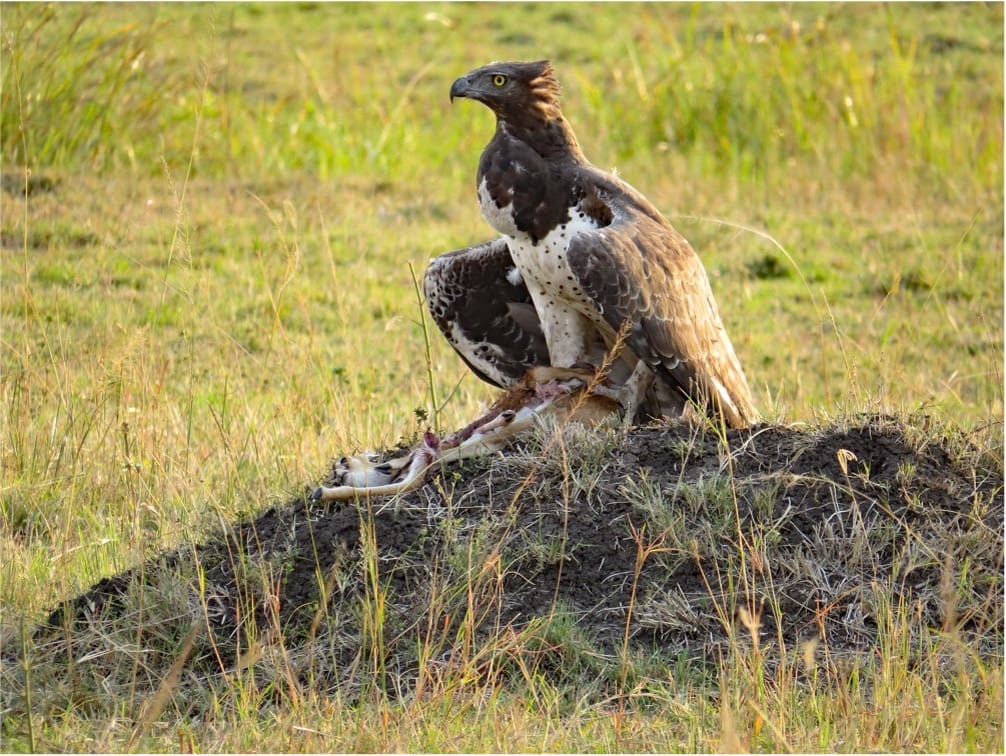
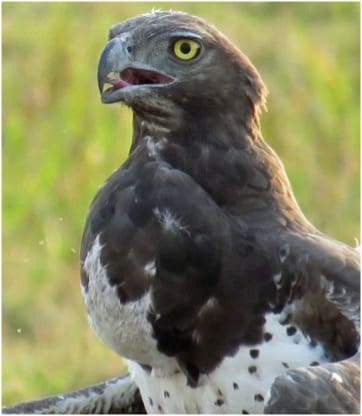
Martial eagle with a gazelle kill, and close up showing full crop.
A martial eagle can consume up to 1–2 kg of meat in a single feeding, depending on the size of the prey and the eagle’s own condition. They tend to feed at the kill site until they’ve had their fill. After a big meal, they can pack their crop with several hundred grams of meat (sometimes close to half a kilogram in a large individual). Food stored in the crop is slowly released into the stomach (proventriculus and gizzard) for digestion over the next several hours. When feeding chicks, adults often arrive at the nest with the crop full and then regurgitate softened food for the eaglet.
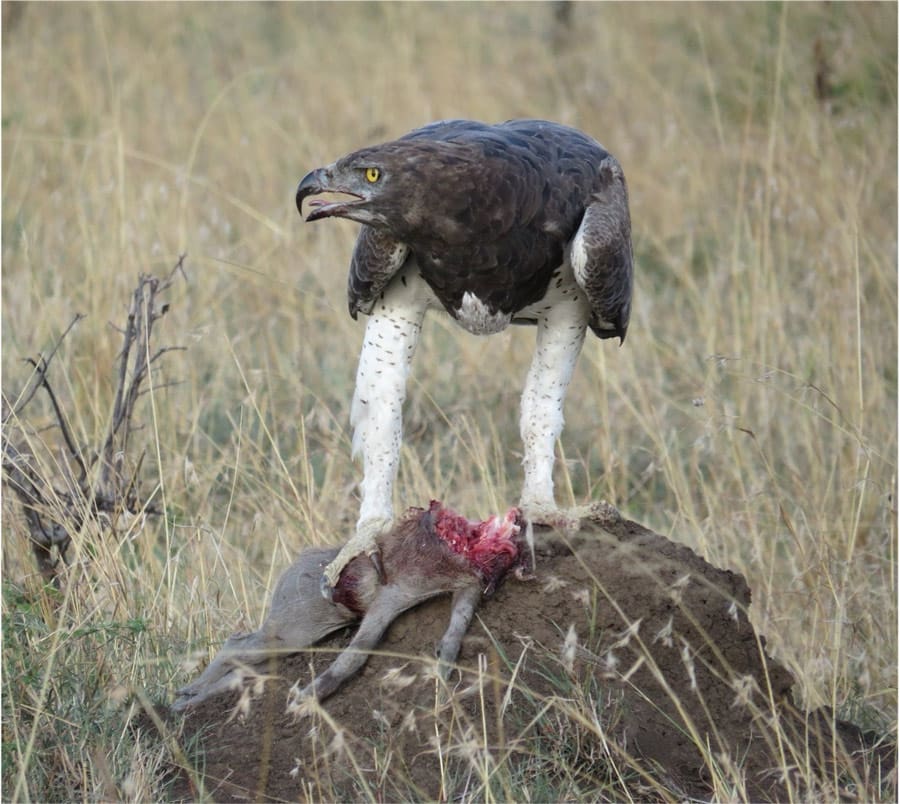
A few weeks later, while following a male leopard through an open woodland just west of Faru Faru Lodge, we were treated to a second sighting, just as dramatic. Once again, a martial eagle had claimed a termite mound as its dining spot, this time feeding on a warthog piglet. The familiarity of the scene was almost surreal: same type of perch, same bold posture, and the same commanding presence. Watching this apex predator go about its business with such calm precision was deeply humbling.
What made both moments so special wasn’t just the rarity of witnessing a martial eagle on a kill, but how completely at ease the birds were in their environment. Unlike most raptors that flee at the first sign of disturbance, these eagles held their ground, unbothered by the vehicles nearby. Their behaviour served as a powerful reminder of the wild, untamed spirit of the African bush.
With its enormous wingspan, gripping talons, and unmatched hunting ability, the martial eagle truly lives up to its reputation. It doesn’t just soar above the landscape, it rules it. These two encounters were, without a doubt, among the most memorable highlights of the month.
Elephants and the unexpected python
Story by Johnson Shayo (JP)
It was late afternoon on August 21st when we embarked on our first adventure with first-time guests staying at Faru Faru Lodge. It was a sunny day, so we decided to do a river drive, hoping to see some of the daily visitors coming to drink along the Grumeti River.
Birdwatching along the riverine habitat was refreshing, and a Goliath heron stole the show. Standing majestically on a rock between the riverbed, it reminded us of the story of the giant Philistine defeated by young shepherd David, who used a sling and a stone to strike him on the forehead.
We continued downstream and soon spotted a herd of elephants feeding among the bushes. As they browsed their way out, one of the few remaining big tusker females appeared, standing upright with ears flattened. Everyone admired the impressive length of her tusks, nearly touching the ground. She calmly resumed feeding, moving slowly past our vehicle before stopping behind a bush to continue peacefully.
Wanting a better view, we repositioned the vehicle so everyone could see her face again and capture pictures that would tell her story for years to come. Just as we were about to reverse, another female elephant browsing ahead suddenly let out a loud trumpet call and walked away. Curious about what disturbed her peace, we switched off the engine to observe quietly.
Peering cautiously around the bushes, we soon spotted what looked like a shiny, unusual fallen log. Grabbing the binoculars, we realized it wasn’t a log at all but a southern African rock python swallowing an adult female impala. The sight was so captivating that we all momentarily forgot about the elephants and even the magnificent tusker who had won our hearts moments earlier.
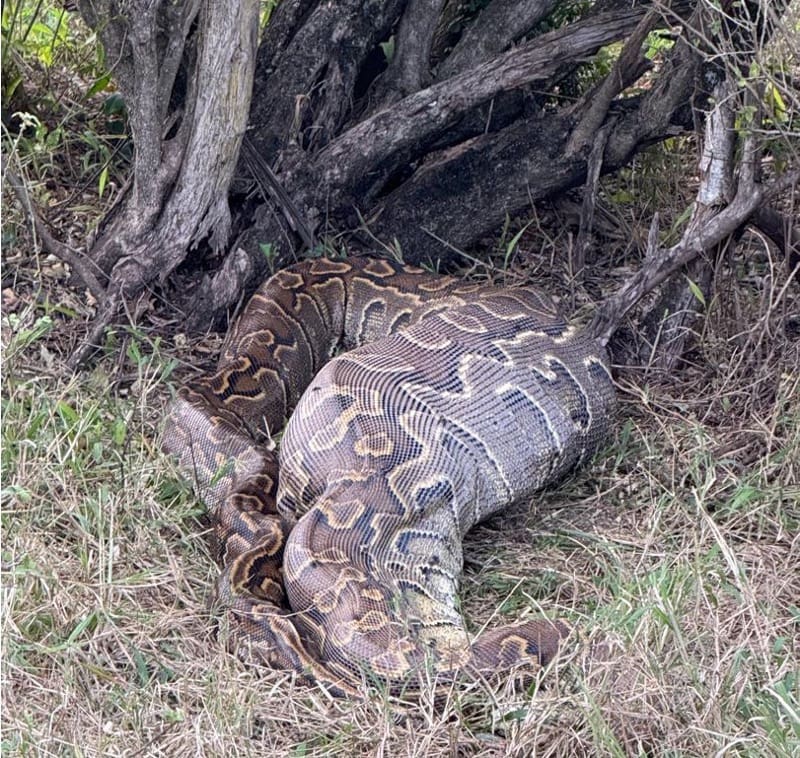
For the guests, this was their first time seeing a snake on safari. While I have seen pythons countless times as a guide, this encounter was special, witnessing the giant snake swallowing its prey right there was unforgettable!
We spent some quality time watching the python before moving on, happily giving other guests the chance to experience this rare and beautiful moment in nature.
Imagine starting your very first game drive with a sighting like this? No doubt, every time they think of an African safari, this image will come to mind. To end the day, we celebrated with a stunning sunset at Ikoma Hill, reminiscing about all the incredible things we had seen.
An extraordinary evening with elephant twins
Story by Adas Shemboko
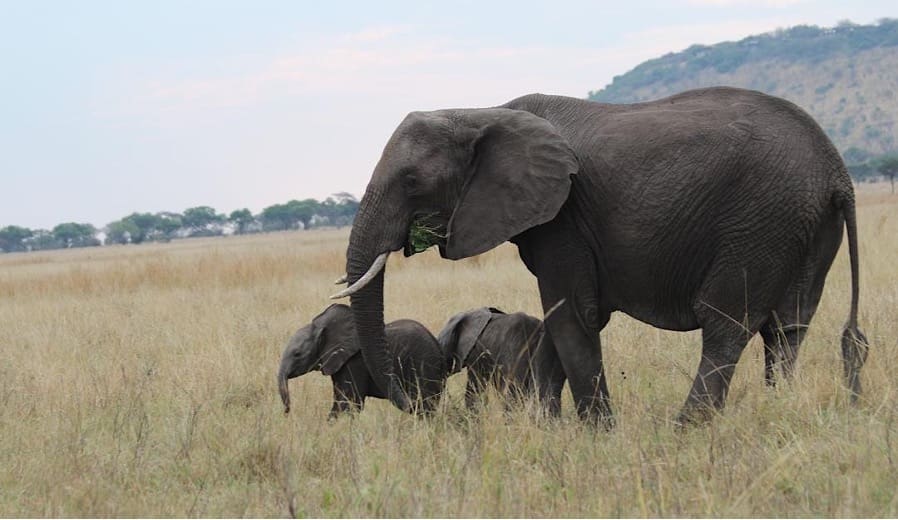
It was in the late evening on the vast Sasakwa Plains, with golden light spilling across the tall grass swaying gently in the breeze. Herds of zebra grazed in the distance, while a herd of elephants moved steadily through the open plain, their silhouettes framed against the warm glow of the setting sun. As we followed their slow, deliberate pace, one female drew particular attention. She was large and calm, moving with the steady confidence of a matriarch. But what made the sight unforgettable were the two tiny calves walking at her side, a pair of elephant twins, barely two months old.
The rarity of the moment was striking. Elephant twins are known to occur at only about one percent of births, making such an encounter an exceptional wildlife record. The young calves, still learning their place in the herd, displayed clumsy yet endearing behaviour. One fumbled with its trunk, trying to lift a stick from the ground, while the other pushed gently from behind, almost as though encouraging its sibling. All the while, the mother remained close and composed, while the rest of the herd lingered nearby, their presence offering both security and guidance.
The plains carried the low rumble of elephant communication as the group moved slowly forward, their unity a reminder of the deeply social fabric that defines elephant life. Unlike many species, elephants do not raise their young in isolation; the whole herd plays a role, ensuring survival through collective care. To witness twins is a rare gift of nature, and to see them thriving under such protection was humbling. As the evening light deepened and the grass glowed with the last warmth of day, it became clear that this was not just another sighting, but a glimpse into one of nature’s quiet miracles on the Sasakwa Plains.
Kings of the Sasakwa Plains – Momukomole males
Story by Bernard Hosea
It has been almost 22 years since conservation efforts around Singita Grumeti Reserves began, and the results are nothing short of remarkable. Wildlife populations have flourished, the balance of nature is thriving once again, and among the greatest beneficiaries of this success are the lions. Today, the concession is home to more than ten different prides, numbering over 200 individuals, a healthy and dynamic population that reflects both protection and abundance.
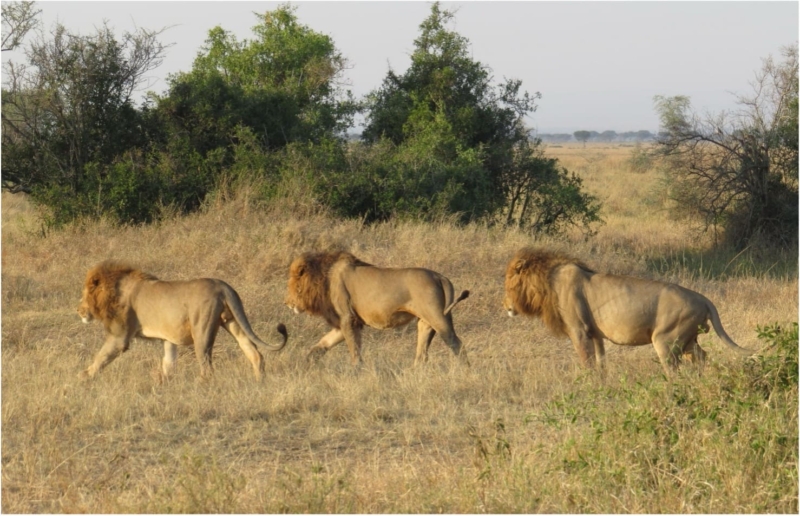
At the heart of this lion landscape is the story of a formidable coalition of four males, the rulers of the central and northern Sasakwa Plains. Known as the Momukomole males, their journey to dominance encompasses resilience, strength, and strategic brotherhood.
A few years ago, these males were young wanderers from the far eastern part of the reserve. Like many nomadic lions, they faced an uncertain future, moving cautiously across territories in search of opportunity. Their moment came when they settled along a gulley near the airstrip, a place called the Momukomole Drainage line. From this humble stronghold, they began building their legacy, and soon the pride itself carried the name Momukomole.
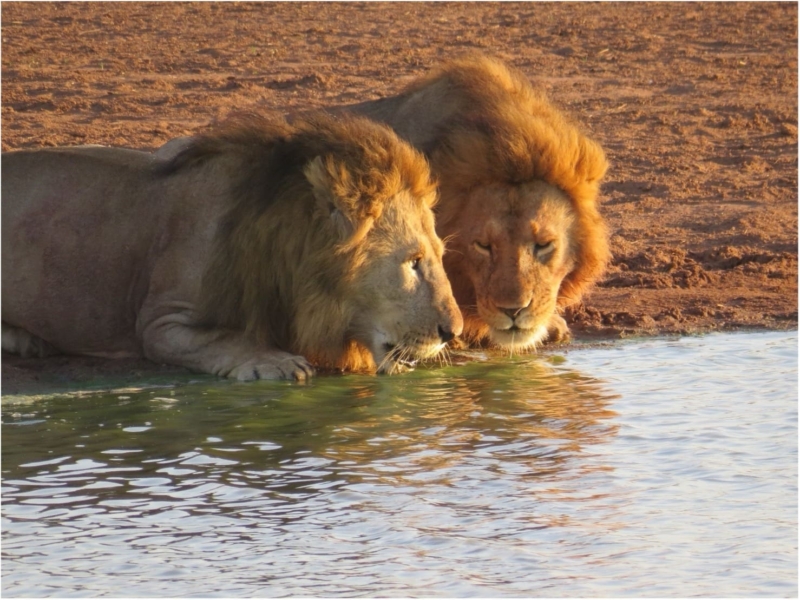
They allied with seven females, believed to be daughters of the renowned Butamtam Pride, which had long dominated the central concession. At that time, Butamtam was under the reign of a powerful coalition of six males, a record-breaking number never before documented in the western Serengeti corridor. With such strength in numbers, the Butamtam males were predicted to reign supreme for many years.
But nature is never predictable. Against all odds, the four Momukomole brothers grew stronger, bolder, and more unified. As they expanded their range north and west into the Sasakwa Plains, they inevitably clashed with the Butamtam coalition. The battles that followed shifted the history of lion dynamics in this landscape. Despite their numerical disadvantage, the Momukomole males challenged, defeated, and ultimately ousted all six Butamtam brothers.
The takeover was complete. The Momukomole coalition claimed not only their own females but also the eleven lionesses of the Butamtam Pride. Today, they command both prides, consolidating their power across a vast territory of rich hunting grounds.
Every day, these four males patrol their domain, a living show of force. Their roars echo across the plains, their presence a deterrent to intruding rivals. With access to abundant females, they have ensured the continuity of their lineage. Already, cubs sired by these males are thriving within the Momukomole Pride. Now, with their conquest of the Butamtam females, a new generation of cubs has emerged, living proof of their dominance and their role as the undisputed kings of Sasakwa Plain.
In the ever changing story of lions, few coalitions manage to hold power over such an extensive territory and over multiple prides. The Momukomole brothers have not only defied expectations but have also written their names into the history of the Serengeti’s western corridor. They embody both the fierce competition and the resilience that define Africa’s most iconic predator.
Download the full report