July started with dry skies and crisp clear mornings, a true reflection of the changing season across the Serengeti. By the end of the first week, the great migration had swept past Grumeti, leaving behind a quiet landscape dotted with only a few resident herds. The abundance that had briefly transformed the area into a feast had vanished, the buffet of wildebeests gone, leaving behind only dust and fading hoofprints. Predators, no longer spoiled by the migratory herds, returned to their usual prey, settling back into the slower rhythm of resident hunting. The month marked not just a shift in weather, but a new chapter in the migration’s epic journey. As Grumeti settled into stillness, attention turned northward toward the Lamai area. There, anticipation built. The wildebeests, now numbering in the hundreds of thousands, pushed steadily toward the Mara River, a natural barrier and stage for one of nature’s most dramatic crossings. This transition, from Grumeti to Lamai, was more than just a movement; it was the rhythm of survival playing out across the plains. The herds pressed forward, driven by ancient instinct, chasing greener pastures across invisible borders. As dust rose behind them and all eyes turned to the north. July reminded us that in the wild, every ending is simply a passage to the next great moment.
July sightings snapshot for Grumeti:
Lions
With the migratory herds gone, lions adapted quickly, turning their focus to the few wildebeests and zebras left behind, along with the resident game that remained on the plains. The days of easy abundance had passed, and the big cats now relied on patience and precision, stalking smaller, more scattered groups. The rhythm of the hunt shifted from bold, opportunistic strikes to the quiet persistence of survival in a leaner landscape.
- Kombre Pride settled along Sasakwa plain, moving around Sasakwa Dam, Arab Camp Thicket and Uwanja Wa nNege Road.
- Butamtam Pride stayed along Chui drainage, Pundamilia hill and WD waterhole. Three females were seen with new cubs along the drainage.
- Sabora Pride stayed along the Sabora drainage, West Link Crossing and morum pit for the most part of the month.
- Members of the Ridge Pride were seen at Ridge hill, Mak Link Road and Sasakwa hill at the helipad.
- Mkuyu Pride members were seen often along the Grumeti River both upstream and downstream of German Bridge.
- Manchira Pride members were seen along the Grumeti River, upstream of Mbega Bridge.
Leopards
While July we saw fewer leopard sightings compared to the remarkable numbers in June, the experience was no less rewarding. With the departure of the migratory herds and the wildebeest calves that had drawn them out, leopards became more elusive once again, slipping back into their secretive habits. Yet, those that we encountered offered unforgettable moments. Each sighting felt hard-earned, a quiet reward for patience and attentiveness in a landscape that never stops revealing itself.
- A big male was seen feeding on a full grown wildebeest kill on the ground at Old School and we think it might have been killed by the lions and left behind, or natural death.
- A female was observed searching for a prey along Grumeti North drainage.
- A shy female was seen near Sabora Camp and she has been seen around for some time now, though is still skittish.
- Raho female was seen up in a balanitis tree in her usual territory along Raho drainage.
- A male was seen east of Koroya hill, lying down on the ground.
Cheetahs
With the migration in the area, the grass was heavily trampled, resulting in shorter grass across much of the concession. This open landscape attracted cheetahs and smaller antelopes like gazelles. The shorter grass made it much easier to spot them.
- The well-known Junior Veteran continued to be seen at different locations on the Sabora plain a few times in the month.
- A big male continued to roam in between the Nyati plain, Old Pundamilia Explore Camp and Serengeti National Park.
- A female and her young cub were seen at Nyasirori high ground a few times and she roamed between the Serengeti National Park and Nyasirori area.
Elephants
July was a drier month and, across the concession, elephants were frequently seen in medium-sized herds. These gentle giants spent their mornings peacefully browsing in the woodlands, feeding on tree leaves, bark, and branches. As the heat of the day set in, they made their way to the waterpoints by mid-morning to drink, cool off, and interact briefly before continuing their slow journey in search of more food and shade.
- Sasakwa plain had a few medium sized herds roaming across the area and gathering at Sasakwa Dam to drink in the afternoon.
- On the western side of the concession around Explore Camps and Gambaranyera we saw elephants feeding in the bushes, on the open plains and Rubana River.
- We saw quite a few small herds along the Grumeti River, Rokare, and in the woodlands east of Bangwesi hill.
- Along Faru areas we saw herds drinking at the waterhole in front of the lodge, along Grumeti North drainage, Rhino Rocks, morum pit area and the watershed.
- Small herds were seen at Old Pundamilia Explore site, Koroya hill and Grumeti west areas.
- There were large herds seen roaming on the Sabora plains and Sabora drainage through the month.
Buffalos
Buffaloes as always, were seen in large herds across the concession, their movements familiar and widespread. They spent the cooler hours of the day feeding across the plains, then settled to rest during the midday heat, often seeking shade or lying in open areas. As the dry season deepened, they continued to follow regular paths to waterpoints. Their constant presence added to the classic safari atmosphere, offering excellent viewing opportunities especially when they congregate at waterholes.
- A very large herd was seen moving along Nyamamba plain, north of Bangwesi hill and Manchira River.
- A herd was seen east and south of Bangwesi hill.
- There were scattered bulls seen along the riverbed during the afternoon, cooling off in the crystal clear water running gently.
- There was a large herd seen moving between Albizia woodland and Lion Rocks Old Explore Camp.
- In the Kombre drainage, there was a large herd roaming between the drainage, Serengeti house and Sasakwa airstrip.
- We had a very large herd at Sasakwa plain moving around Sasakwa Dam, Old School, OP 7, and Farasi area.
- A large herd was recorded along Butamtam drainage, den-site area and Ridge hill, and Fungo area.
- One large herd roaming around Sabora plain, Old Rubana Link area and Fisi plain.
- A large herd also roamed the open plains of Gambaranyera, near Explore camps.
- A small herd was sighted along Grumeti north drainage.
- A very large herd was observed moving south of Koroya hill, Grumeti west area, and Nyati plain.
Rhinos
The female black rhino was seen a few times in the month browsing inside the thickets on the northern side of the boma.
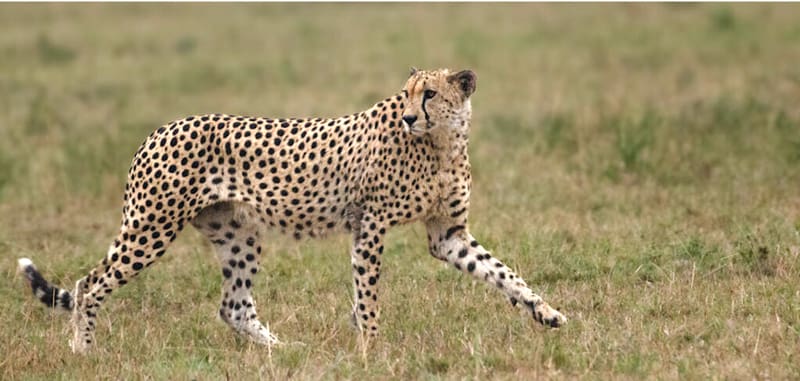
A female cheetah seen walking at the beginning of Raho drainage. Pictured by Abutwalbu Ngua
July sightings snapshot for Lamai:
Lions
August marks a thrilling turning point in the Lamai Triangle, as the migration arrives in full force and with it, the lions seem to come alive! Massive wildebeest herds spread across the plains, drawing the attention of resident prides that know this season well. The abundance of prey sparks a surge in activity, from calculated stalks at dawn to explosive chases across the grasslands. For those lucky enough to witness it, August in Lamai offers front-row seats to some of the most dramatic predator-prey interactions on the planet!
- The Kigelia Pride with 18 members has firmly established its presence as one of Lamai’s most formidable forces. Seen regularly throughout July, this powerful pride has become a defining feature of the landscape. With strong male leadership, a cohesive group of lionesses, and the next generation of cubs thriving under their protection, the Kigelia Pride embodies the raw strength and unity that make Lamai such a thrilling place for lion sightings.
- There was another pride of four members consisting of two males and two females seen along the Kenyangaga drainage towards the end of the month.
Leopards
July was an exceptional month for spotting these elusive cats. Sightings increased noticeably, with a fascinating mix of both relaxed individuals and those that remained characteristically shy. These moments offered guests a rare look into the complex nature of one of Africa’s most secretive predators, a true privilege in such a wild and untamed setting.
- A female leopard was frequently seen at Alex Walker plains and Daraja la Minazi.
- A female with one cub seen along Kenyangaga drainage upstream of Daraja Mbili.
- A female seen often near the Maasai Mara and Serengeti boundary areas.
- A male seen southeast of Alex Walker Camp.
- A male seen along Kenyangaga drainage, all the way to Kampikampi plain.
- A skittish female seen around olive tree area.
Cheetahs
In July, the arrival of the migration transformed Lamai’s open plains into prime cheetah territory. With herds of wildebeest moving through and vulnerable calves, cheetahs quickly adapted their focus, shifting from gazelles to the more abundant and often easier, wildebeests’ calves. The vast grasslands provided ideal conditions for high speed pursuits, and guests were treated to remarkable displays of agility and precision as these sleek predators took full advantage of the seasonal bounty.
- A coalition of two brothers roamed widely across the open plains of the Lamai Triangle, moving independently as they navigated the area on their own.
- A coalition of three male cheetahs was seen on the southern bank of the Mara River. Due to the high water levels, they hesitated at the edge and ultimately chose not to cross, remaining on the banks as they assessed the situation.
Elephants
Elephants were seen in good numbers throughout Lamai, with decent-sized herds scattered across the open plains and along the Mara River. Their steady presence added a calm, majestic energy to the landscape, offering guests peaceful and memorable encounters.
- There was a large herd seen almost every day at Kampikampi and Alex Walker open plains.
- Another beautiful herd was seen along the Kenyangaga drainage.
- A few bachelor bulls were seen moving around open plain and along the Mara River as well.
Buffaloes
Buffalos were spotted throughout the month, not in large numbers, but in sufficient groups to offer guests some rewarding sightings across the plains.
- There was a very large herd seen roaming along Korongo la Fisi, Chaka la Majangili and Kampikampi plain.
- A large herd was seen along Korongo la Kigelia and the Maasai Mara boundary area.
- Another herd spent time along the Alex Walker plains.
Plains game
In July, the open plains of the Lamai Triangle teemed with life. With the arrival of the migrating wildebeests, the landscape transformed into a dynamic scene of movement and energy. Resident zebras and hundreds of Thomson’s gazelles mingled with the herds, creating a rich tapestry of wildlife.
Other interesting sightings
This month marked the beginning of the season’s excitement, as the wildebeest began their dramatic crossings of the Mara River. It was a truly breath-taking spectacle, one that captivated all who witnessed it and drew visitors from far and wide to experience this unforgettable natural event. But the migration wasn’t the only interesting sight – far from it in fact. There were many mesmerising wildlife scenes including ostriches walking on the Lamai open plains.
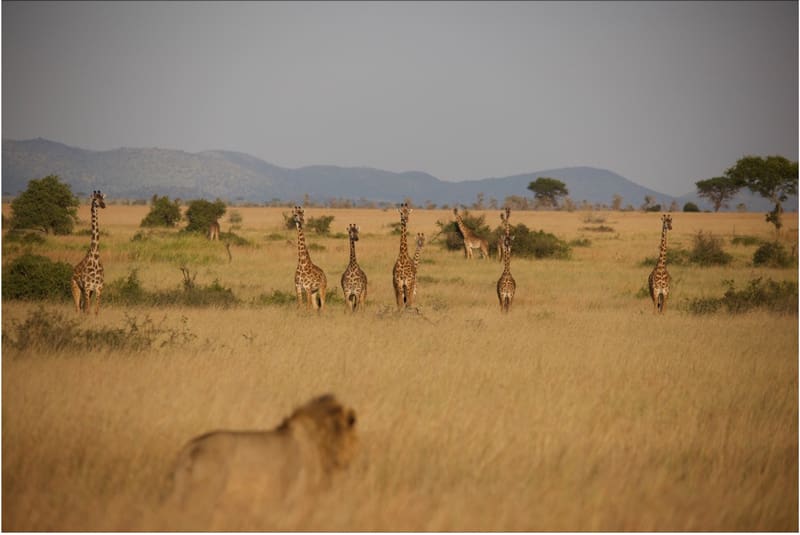
One of the Kigelia Pride lions photographed with giraffes on the Lamai plains. Pictured by Clinton Sengenge.
Some bush stories to follow, as well as our July Gallery.
A leopard, four lions, and a perfect escape – a tale from Lamai Triangle
Story by Eugene Laizer
One afternoon, we set out for a short game drive in the Lamai Triangle, hoping to see some elephants and, if we were lucky, maybe a few cats. We drove slowly along the Kenyangaga drainage, scanning the bushes and trees, and finally reached the wide open Kampikampi plains. There, we spent peaceful time watching a small herd of elephants feeding and moving gently through the golden grass.
As the sun started to dip toward the horizon, we decided it was time to find a nice spot for a sundowner. One of us pointed out a good looking tree in the distance where we could stop, stretch our legs, and enjoy a drink while watching the sunset. We began heading in that direction, but something caught my eye in the distance, about a kilometre away. High up in a tree was a shape that didn’t quite match the branches.
I picked up my binoculars and looked again, yes, it was a leopard! That changed our plan immediately. The drinks could wait. We turned the vehicle and slowly made our way toward the tree. As we got closer, something felt unusual. The leopard was sitting calmly in the branches, looking composed. That was strange because the leopard we usually see in this area is very shy and skittish. It doesn’t stay in the open for long and usually disappears at the first sign of a vehicle.
Then we looked down and everything made sense. Beneath the tree were four lions, lounging in the shade, waiting. They had trapped the leopard up in the tree, hoping she would make a mistake and come down. That explained why she was so still and careful and why she wasn’t running away.
We waited there quietly, watching the scene unfold. The sun dipped lower, casting golden light across the land. The lions seemed relaxed but alert. They knew the leopard was up there, and they weren’t going anywhere.
But then, as the light began to fade and shadows stretched long across the ground, the lions got up and started to shift positions as the signs of waking up ready for the night. In that brief moment of movement, the leopard saw her chance. And what happened next was pure magic! Without a sound, the leopard slipped down the tree. It was so silent, so quick, that we barely noticed it, just like water flowing gently in the deep sea. In just a blink, she touched the ground and vanished into the thick grass, out of sight from the lions and from us.
It was one of the most incredible moments of our safari. We didn’t get our sundowner, but we got something far more special, a true lesson in stealth, patience, and survival. Watching a female leopard outsmart four lions in total silence was something we will never forget.
That’s the magic of the wild. You go out looking for elephants and maybe a drink under a tree and end up with a once-in-a-lifetime story.
The story of Maridadi, the young leopard
Story by Paulo Kivuyo
In the soft, golden light of an early morning game drive, something truly special happened. As we drove slowly through the bush, enjoying the peaceful start to the day, we were lucky enough to come across a young leopard. Her name is Maridadi, which means “beautiful” in Swahili and she really is. With her sleek spotted coat and calm, curious eyes, she looked every bit as graceful and stunning as her name suggests.
Maridadi is the daughter of a famous leopardess named Raho female, who is well known in the area. At just 18 months old, Maridadi has already started to live on her own. This is quite early for a leopard, since most young leopards stay with their mothers until they are about 20 months old. But Maridadi seems to be growing up faster than usual. She is already showing signs of becoming a strong and smart leopard, ready to face the world by herself.
Right now, Maridadi is in the process of creating her own territory. Her new area touches the edge of her mother’s land. This kind of overlap is something that often happens when young leopards begin their independent lives. It allows them to stay close to the places they know well, while still learning how to survive and hunt without help. It’s like slowly stepping into adult life, but with the comfort of a familiar environment.
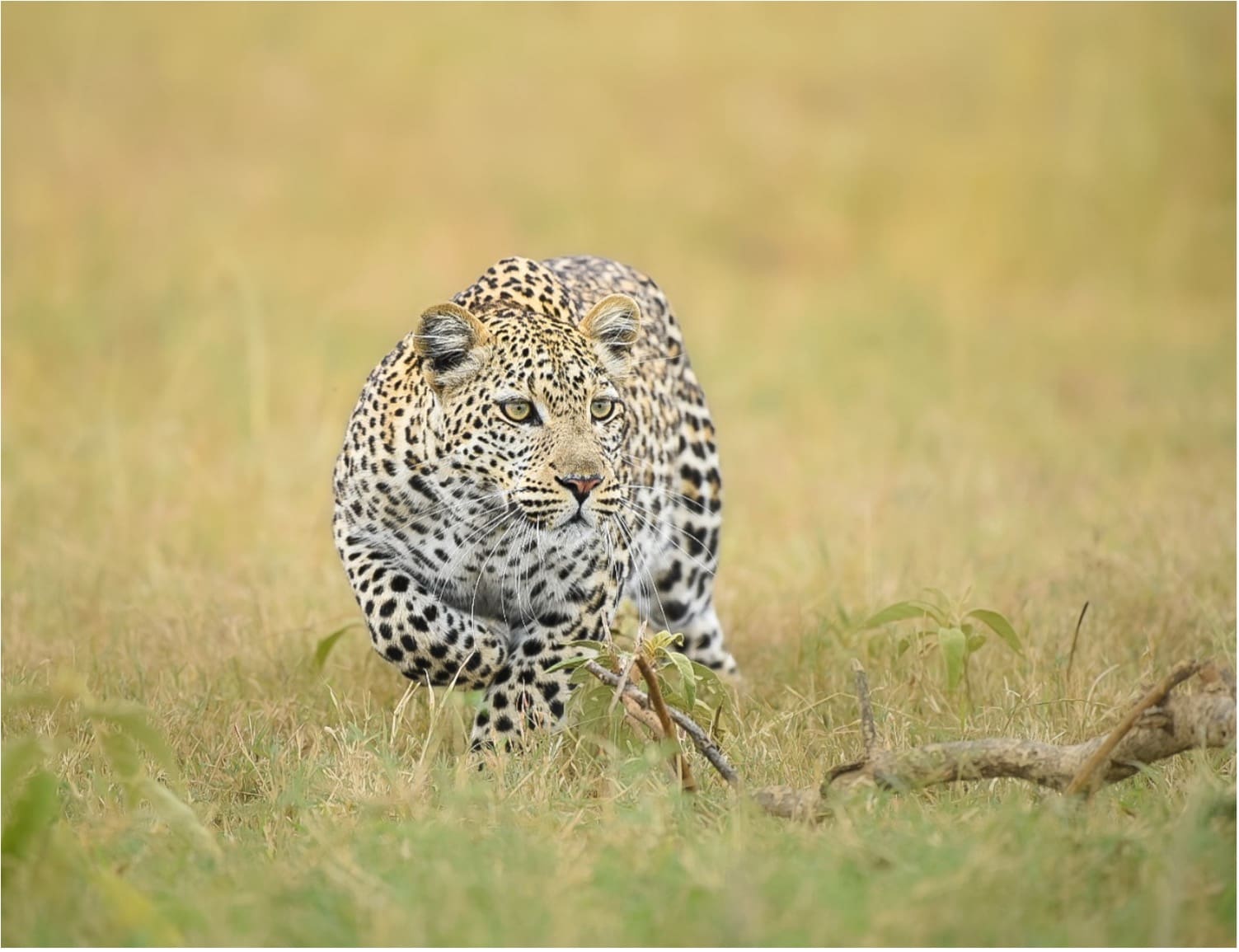
The moment that made this whole encounter so unforgettable was watching Maridadi in action. As we watched from the vehicle, she suddenly crouched low in the tall grass. Her eyes locked on a gazelle nearby. She moved slowly and silently, with her muscles tensed and ready. Every tiny movement she made showed her wild instinct and quiet strength. It was amazing to watch, she was so close to making a successful hunt. The air felt thick with excitement, and we all held our breath.
But then, just as she was about to strike, a hyena appeared out of nowhere. The noisy and bold hyena interrupted everything! The gazelle ran away, and Maridadi had to make a quick decision. She knew that fighting the hyena would be dangerous and not worth the risk. Instead of staying and possibly getting hurt, she wisely chose to retreat. With graceful ease, she climbed up a nearby tree, where she could stay safe and keep an eye on the area from above.
Watching her that morning was a powerful reminder of how smart and careful wild animals must be. Even though Maridadi is still young, she already knows how to make the right choices. She didn’t get her meal that day, but she showed strength, beauty, and wisdom, just like her mother, Raho female.
A remarkable July encounter — the elusive Pangolin
Story by Edward Kaaya
Among all the creatures that roam the African wilderness, few are as mysterious and rarely seen as the pangolin. Covered in overlapping scales and equipped with a powerful sense of smell, this shy, nocturnal animal is the world’s only truly scaly mammal and one of the most elusive. Despite being well adapted to the bush, pangolins are masters of concealment, moving quietly and mostly under the cover of night. For most guides and safari-goers, even a single sighting in a year is considered incredibly lucky. Having last seen a pangolin in December last year, this sighting at the start of July marked our first pangolin encounter of the year, making the experience even more special.
It was during a quiet afternoon drive when we spotted a shape moving steadily in the open grassland. At first glance, we could hardly believe our eyes, a pangolin, fully out in the open. What made this sighting even more extraordinary was the animal’s behaviour. Unlike previous encounters, where pangolins would instinctively coil up in a tight ball at the slightest disturbance, this one was remarkably relaxed. It paid little attention to our vehicle and continued with its slow, deliberate movements, completely at ease.
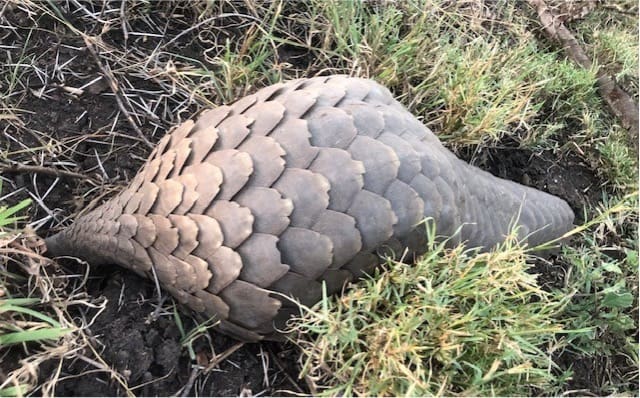
We watched, and were mesmerized, as it foraged in the undergrowth. Using its strong foreclaws, it dug into the soft soil, pausing occasionally to flick its long, sticky tongue into ant nests. From time to time, it shifted position, ambling unhurriedly to a new patch of ground in search of food. The soft rustle of leaves and the gentle tapping of its claws were the only sounds as it moved between termite mounds. This behaviour allowed us a longer and more detailed observation than we ever expected, a rare privilege in these parts.
Pangolins are solitary and secretive, and most sightings last just a few seconds before the animal disappears or curls up in defence. But on this occasion, we were able to follow it discreetly for quite some time, witnessing natural behaviour in a completely unbothered animal. For many in the vehicle, it was their first ever pangolin sighting and for those who had seen one before, this was by far the most intimate and rewarding.
Moments like these remind us why the wild is endlessly fascinating. Even seasoned guides who spend every day in the field may go years without such a close encounter. This sighting, in its quiet simplicity, was a highlight of my career.
Download the full report