December in the Grumeti Concession began with notably dry conditions. For most of the month, the landscape remained brown and dusty, and any movement across the plain raised clouds of fine dust. Whether early in the morning or late in the afternoon, herds moving through open areas left a visible trail behind them, clearly showing how dry the ground had become after weeks without rain. Due to the dry weather, the only reliable water source in the central area of the concession was Sasakwa Dam, and herds formed long columns from all directions as they slowly made their way in to drink. The dry conditions dominated daily wildlife movements and gave the concession a quiet, sun-baked appearance.
Toward the end of the month, the weather changed dramatically. Dark clouds gathered and heavy rains fell over several days, bringing much needed moisture to the land. The transformation was quick and the plains responded almost immediately, turning green as fresh grass emerged across the concession. In the blink of an eye the scenery felt renewed, with new growth spreading across areas that had been bare and lifeless only days before.
With rain having fallen across much of the Serengeti ecosystem, the migratory herds instinctively began their journey south towards the southern Serengeti plains. Those that had remained in Grumeti for an extended period moved on within just a few days, following the fresh grazing elsewhere. Grumeti, now green and refreshed, remained home to its resident wildlife. Elephants, buffaloes, gazelles, topi, and a few zebras were seen widely spread across the concession, calmly filling the open spaces and bringing a balanced and peaceful close to the year.
Here are December’s sightings for Grumeti:
Lions
December offered exceptional lion viewing throughout the month. At least six prides were seen almost daily, remaining within relatively small areas as the abundance of prey reduced the need for long movements. With wildebeest and zebras spread across the landscape, the lions were rarely far from food, and each night brought fresh opportunities to hunt. This richness of game allowed the big cats to feed regularly, creating consistent and memorable sightings as they confidently occupied their territories across the concession.
- Kombre Pride members took full advantage to ambush buffalo at the waterhole near Sasakwa during the night. Guides with guests had the opportunity to witness kills twice in the month.
- Mkuyu Pride members were seen moving around Mbuni Hill, Pelican Pan and Sand Beach areas.
- Faru Pride members were frequently observed at the waterhole in front of the lodge, as well as in Grumeti North Drainage and Faru bush breakfast site areas.
- Butamtam Pride remained in the OP 7 area throughout the month. They hunted on the plains during the night but returned to the slopes of OP 7 each morning.
- Sabora Pride, as always, stayed close to Sabora camp, moving along the Sabora Morum Pit, Sabora Drainage, and West Link Crossing areas.
- Ridge Pride females were seen around Sabora Access and Ridge Hill. Two of the females were observed mating with Kombre males.
Leopards
Leopard viewing during December was truly exceptional and beyond words! A total of 11 different individuals were recorded, marking the highest number seen in 2025. Guests visiting the reserve during this period were rewarded with outstanding sightings of these elusive and special cats of the wild, making it one of the most memorable months for leopard encounters.
- The big, shy male of the Sabora area was seen resting in a Kigelia tree along Sabora Drainage.
- Mapengo male was observed earlier in the month around Maruru Crossing.
- Kombre male was seen moving between Sasakwa Dam, Chui Drainage, and Arab Camp Hill during the month.
- Maridadi female was seen on the Nyati Plain, near the old Pundamilia Explore camp.
- Mbogo drainage male was spotted along Mbogo Drainage, north of Faru Lodge.
- A male was seen resting in a shady Kigelia tree along Nyasirori Dam Drainage.
- A shy male lurked around the German Bridge.
- Grumeti North female daughter was found with an impala kill west of Grumeti North Drainage.
- A shy female was seen along Nyasirori Dam Drainage.
- Two males were seen having a terrifying territorial dispute at Nyasirori Dam.
Cheetahs
Cheetah sightings were noticeably higher compared to November. Guides who scanned the open plains looking for cheetah didn’t lose any time. With so many gazelles roaming the grasslands, the cheetahs were naturally drawn to the area, their presence amplified by the abundance of prey.
- The well-known Kisikio was seen several times along Nyati and Pundamilia Plains.
- A mother and her sub-adult cub were observed south of Balanitis Explore camp and Nyasirori High Ground during the month.
- A big male was seen a few times east of Sasakwa Airstrip and along Kombre Drainage.
- A female was spotted moving north of Kawanga Scouts’ camp.
- A male was spotted in the seyal woodland north of Sabora camp.
Elephants
Elephants continued to roam the woodlands and open plains of the reserve throughout the month. With the large herds of migratory animals around, the elephants often split into smaller family groups. Towards the end of the month, following the departure of the wildebeests, these groups reunited to form mega herds of up to a hundred individuals. Their massive presence could be seen and felt across the plains, a true testament to the strength and social bonds of these gentle giants.
- Large-sized herds were moving around the Mbogo Drainage, Maruru areas, Rhino Rocks, and Biribai areas.
- RISE, EEC, and the Rubana River hosted the highest concentration of these majestic creatures throughout the month.
- Medium-sized herds were observed along the Nyuki bush breakfast site thickets, west of Sabora camp.
- Several herds were seen at Grumeti River from mid-morning through the afternoon as they sought water.
- Faru waterhole became a hotspot for elephants, with several herds visiting daily to drink and wallow.
- As always, Kombre and Albizia woodland had several small herds moving along the drainage.
- Ikorongo areas hosted several small herds at Nyamamba, Manchira, Nyabeho, and Rokare areas.
Buffalo
As always, large herds of buffalo were seen across the reserve throughout the month. They wandered the open plains and edges of the woodlands in search of fresh grazing, moving slowly but steadily as the adults led the way. Dust rose under their hooves, and the low grunts and snorts of the herd echoed across the landscape, a constant reminder of their presence. Their presence added a steady rhythm to the plains, a reminder of the resilience and strength of these iconic animals.
- A very large herd was seen drinking near Cottage 8 at Sasakwa Hill every evening.
- A very large herd was observed around Colobus Crossing, both east and west of the Grumeti River.
- A large herd was moving between Sabora camp and the Rubana River.
- Koroya Hill hosted a large herd that moved between Grumeti West, Nyati Plain, and Pelican Pan.
- A herd was seen at Sabayaya during the night only.
- A large herd was moving along Tembo Road, Uwanja Wa Ndege, Kombre, and Serengeti House.
- Albizia woodland had a very large herd moving through the area, both north and south of the woodland.
- Another herd was observed at Old School, Sasakwa Dam, and the Farasi area south of Sasakwa.
- A large herd was roaming Manchira and Nyamamba Plain.
Rhinos
The rhinos and their calves are all doing well, so that ends the year on a very positive note.
Where survival meets sunrise
Story by Neema Ngowi
It was in the morning of 20 December that we had a powerful and raw experience in the wild, one that will stay in our minds for a long time. At around 07:30, as the sun was just rising and the land was still quiet, we came across the Kombre Pride. There were about 14 lions moving together with purpose and focus. Not far to the west of Rhino Boma we realized they had targeted a zebra foal. It all happened so naturally, yet so powerfully, reminding us of the true circle of life and the harsh realities that rule the wilderness.
Watching the scene was highly emotional. The foal cried out loudly, but there was no response from the mare or the herd. That moment was heart-breaking and sad, especially hearing those calls. At the same time, it was impossible to look away. Who are we to judge? We witnessed nature in its rawest form, no filters, no mercy, just survival of the fittest. The carnivores were hungry, and the young herbivore was their only chance for a meal.
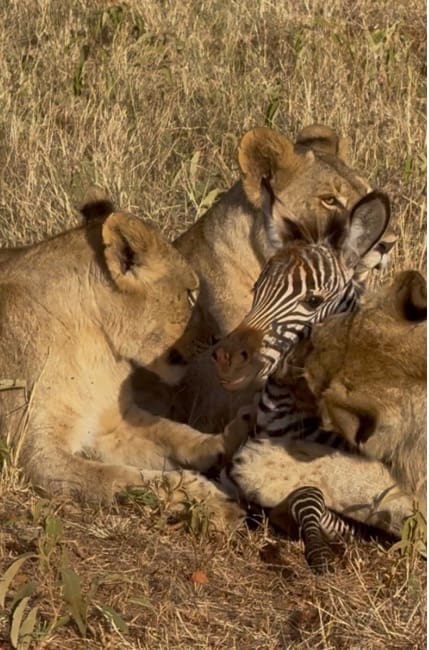

The chase was swift, and the struggle was quick. Dust rose into the air as the lions moved with strength and teamwork. Everything happened so fast, yet it felt like time slowed down. We watched for nearly an hour, hardly breathing, completely silent, as the pride settled down and began to feed. It was intense. No one spoke much during that time. We were all trying to process what we were seeing.
As the morning went on, the lions rested in the nearby shade, while we slowly prepared to leave the area. Everyone left with mixed emotions, sadness, respect, awe, and gratitude. It was an unforgettable morning, filled with powerful memories and lessons about life in the wild.
This experience reminded me of the importance of respecting and preserving this incredible ecosystem. The wild is not always gentle, but it is always honest. There is no fake news, no AI and no filters. We felt grateful to witness such a rare and powerful moment, and we left knowing that Nature will always open the minds of those who take the time to observe and respect it.
A giraffe’s Christmas Eve birth
Story by Silas Shayo
On the early morning of December 24, 2025, during our game drive, we witnessed something truly rare and special. A female giraffe was about to give birth. We realized the moment was close when we noticed the tiny front legs of the calf had emerged from the birth canal. She stood calmly, moving slowly, while keeping an eye out for danger. From a safe distance, we watched her for about an hour, understanding how sensitive this moment was.
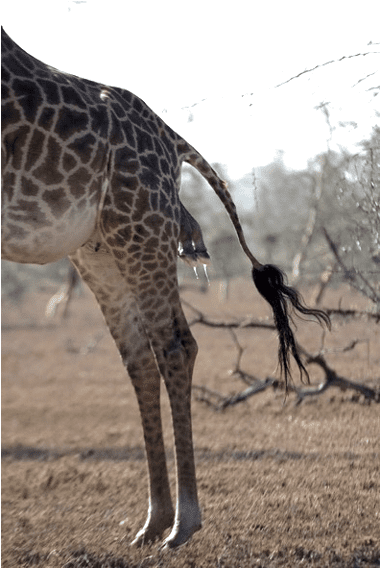
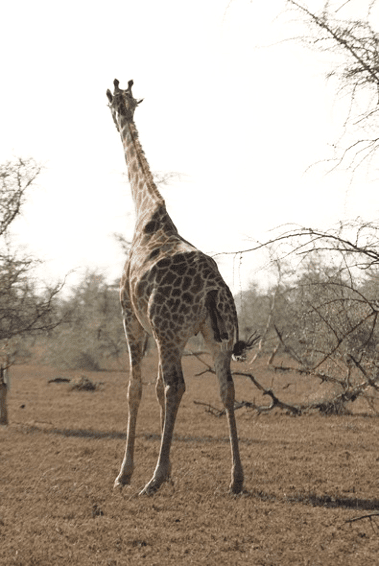
Wanting to respect her space, we decided to leave the area so she could give birth without disturbance. We knew that even quiet human presence could cause stress. About forty minutes later, we carefully returned. The timing could not have been more perfect. As soon as we arrived, we saw that the calf was already halfway out. In less than a minute, the mother gently delivered her baby, and the newborn fell softly onto the ground. Witnessing such a powerful moment of life on Christmas Eve made it feel even more special.
The newborn giraffe lay still at first, its long legs folded beneath its body. Slowly, it began to move, trying to understand its new world. After about seven minutes, the calf made its first attempt to stand, wobbling and struggling to balance. The mother stayed close, calm and protective. After forty-five minutes of effort, the calf finally stood upright and began to nurse, a clear sign of strength and survival.
We remained quietly in the distance for more than three hours, careful not to interfere. Watching the bond between mother and calf and seeing the first moments of a new life in the wild, was deeply moving. It was a beautiful and rare experience, and a Christmas Eve we will never forget.
A cheetah mother in the Serengeti
Story by Abutwalbu Ngua
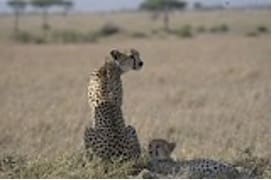
In the western corridor of the Serengeti, where danger is always close, a well-known female cheetah has raised her cub with skill and patience. This region is crowded with powerful lion prides and constantly patrolled by watchful hyenas, making it one of the most challenging places for a cheetah to bring up young. Yet for her, this harsh landscape is familiar. She has done this before, and experience guides every decision she makes.
She is never still for long. Movement has been her greatest protection. From the Nyasirori high ground, she carefully scans the land below, reading the plain for signs of safety and threat. Tracks in the dust, distant calls, and sudden silences have shaped her choices about when to stay and when to move. Each journey toward the western plains of Kawanga is deliberate. Some areas are avoided completely, heavy with the scent of lions. Others are used briefly, chosen for open visibility and clear escape routes.
Her cub, now nearly grown, follows with confidence rather than hesitation. The lessons taught through action have taken hold. It knows when to freeze in the grass, when to move quietly, and when to run without hesitation. Playful moments still appear, but they are fewer now, replaced by focus and readiness. The sub-adult cub no longer needs constant guidance, it is learning to make its own decisions.
As days pass, the mother’s careful movements across the corridor mark the final stage of teaching. She has done more than survive, she has prepared her cub for life on its own. In one of the Serengeti’s most perilous regions, this experienced female cheetah proves that awareness, patience, and constant movement can turn even the hardest landscape into a place where the next generation is ready to continue its own.
Pangolin By Johnson Shayo
It was a rainy afternoon, with steady drops soaking the reserve and keeping most guests indoors. Many had already enjoyed several game drives and chose to rest. One family of four, however, was full of excitement. This was their last destination, and the rain was not going to stop them from exploring.
We put on our ponchos and gently started the engine, slowly descending Sasakwa Hill while taking in everything nature had to offer that afternoon. About fifteen minutes into the drive, we came across a breeding herd of buffaloes. We spent a good amount of time there, watching the bulls wallowing in the mud, cows calmly feeding their calves, and the rest of the herd grazing peacefully across the plains.
Suddenly, a call came through on the radio: a lion pride had been spotted nearby, with special mention of how actively the cubs were playing. Without hesitation, we decided to head in that direction. Arriving just in time, we were rewarded with a beautiful scene. The cubs were full of energy, playing around fallen trees and hopping over rocks, while the adult lions sat at a distance, quietly watching over them.
As we scanned the area, counting the scattered cubs, one of them caught our attention. It seemed very focused on something we couldn’t see from our angle.
We slowly repositioned the vehicle to get a better view. Within seconds, we saw the cub jump onto what looked like a small rock and begin to roll around. After a couple of turns, we noticed scales and the tip of a tail. To our amazement, the “rock” was actually a pangolin! It was tightly curled and bravely protecting itself from the predators around it. Most likely, the lions had cornered it before we arrived.
We sat there in quiet excitement, talking about how incredibly special this sighting was. For me, as a guide, it was even more poignant as it had been exactly a year since my last pangolin sighting. On that rainy afternoon, with ponchos on and hearts full, nature had given us a truly rare and unforgettable moment.
Eventually the lions left the pangolin, but it remained tightly curled in its impenetrable fortress, wisely not unfurling itself until danger had well and truly passed.
The ground pangolin (Temminck’s ground pangolin, Smutsia temminckii) is classified as Vulnerable on the IUCN Red List, facing significant threats from poaching for its scales and meat, habitat loss, and electrocution on fences, despite being the most widespread African pangolin.
Download the full report