February began with heavy rains across the concession, transforming the landscape into a vibrant stretch of tall, green, lush grass. The abundant rainfall has provided more than enough grazing for all resident wildlife, creating a season of plenty. With food readily available, the plains are buzzing with activity as animals take full advantage of the rich feeding grounds. The entire ecosystem feels refreshed and renewed, as the rain breathes new life into every corner of the landscape. Seasonal pools that were once dry and cracked are now filled with fresh rainwater, reducing the need for long journeys in search of drinking spots. The Grumeti river, which had previously run dry, is now flowing strongly once again, and Sasakwa Dam is replenished, restoring vital water sources throughout the area. These renewed water systems are not only supporting large mammals but also smaller species and birds that depend on reliable water sources.
February sightings snapshot for Grumeti:
Lions
During February, the Grumeti Reserve was alive with lions, and we encountered seven different prides moving confidently across their territories. It was a remarkable month, with prides truly thriving, mothers nursing young cubs, playful sub-adults testing their strength, and dominant adults standing guard with quiet authority. Nearly every pride included cubs and youngsters, all appearing healthy and in excellent condition. The abundance of life and the strong presence of these magnificent predators made February on the plains both unforgettable and deeply heartening to witness.
- Kawanga Pride, the largest of all with approximately 40 individuals, was seen several times east and south of Kawanga Scouts Camp during the month.
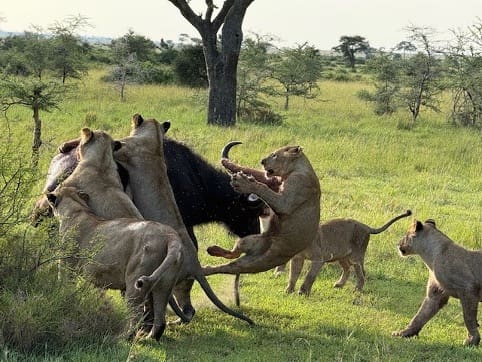
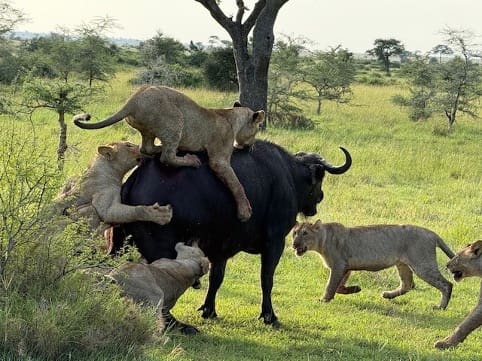
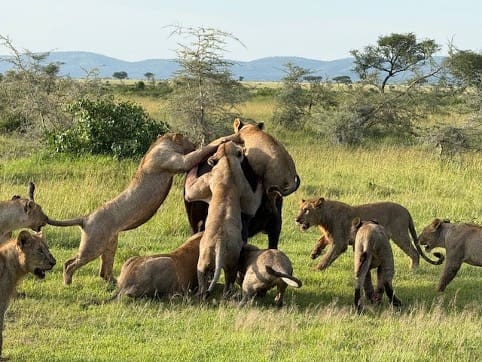
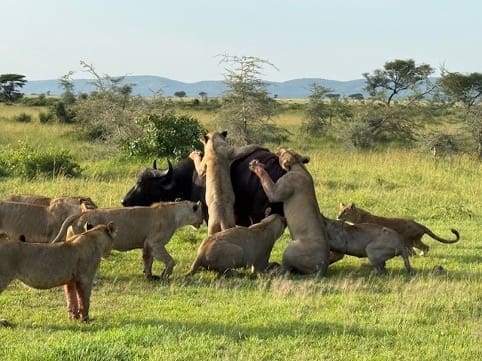
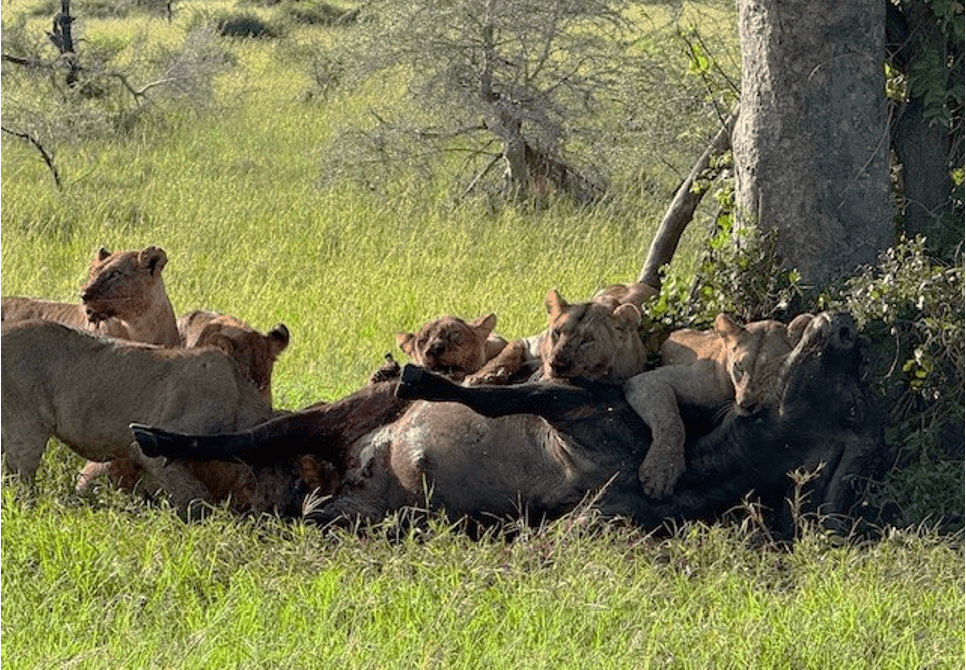
- Sabora Pride members were observed along the Nyasirori high ground, as well as around Sabora Tented Camp and Raho Drainage. They hunted and killed a buffalo in full view of guests, the story of which follows in this journal.
- Butamtam Pride, Ridge Pride and Mkuyu Pride were all viewed in their usual territories. Faru Pride were observed along Faru Access and in the Grumeti North area, and on one occasion were seen close to Faru Faru Lodge at night. The Momukomule Pride members were frequently encountered at the Sabayaya staff premises at night, as well as along Kombre Drainage and around Sasakwa Airstrip.
Leopards
The month offered a fascinating mix of both shy and relaxed leopards, making every sighting unique and memorable. At times we encountered individuals that melted quietly into cover, living up to their well-earned reputation for being elusive and secretive. On other occasions, we were treated to wonderfully calm and confident cats, allowing us extended views of their grace and beauty. This contrast in behaviour reminded us just how special it is to spend time with these remarkable predators, so often unseen and always captivating.
- The Kombre male was seen with a kill hoisted high in a sausage tree along Ikoma Drainage.
- The shy male from the German Bridge area was seen west of German Bridge.
- The Sabora dominant male was observed in close association with Maridadi (female leopard) along Raho Drainage, and again along Sabora Drainage the following day. We suspect Maridadi may be coming into oestrus.
- The Mbogo Drainage male was seen with an eland calf kill hoisted up in a balanitis tree along the watershed.
- Grumeti north male was seen north of Martin’s hill.
- Shy males were seen north of Biribai morum pit, on the open plains north of Sasakwa Dam, and in the woodland east of Pundamilia Hill.
- A female was found with a gazelle kill hoisted in a tree south of Koroya Hill.
Cheetahs
Throughout the month, we continued seeing the same cheetah individuals, with little change in their movements and overall low numbers in the area. Their scarcity made every encounter feel even more special and rewarding. Each sighting was a privilege, offering those fleeting yet unforgettable moments with these elegant and swift predators, whose presence on the plains always adds a unique sense of excitement to the experience.
- Two brothers were seen east of Nyamamba Bridge, north of Bangwesi Hill.
- The mother and her cub continued to roam across Nyati Plain and the areas close to the Serengeti National Park boundary.
- The dominant male was frequently sighted south of Pundamilia Hill and around Nyati Plain.
Elephants
Smaller herds of elephants have come together to form larger groups, moving gracefully across the open plains feeding on the freshest growth. With heavy rains that continued throughout the month, February transformed the landscape into a lush, green paradise. Their numbers made sightings effortless, yet we never took this abundance for granted, instead we appreciated every encounter and every moment spent in the presence of such remarkable animals.
- With plenty to graze on, vast herds appeared relaxed and thriving, and we were fortunate to witness a few mating interactions among them.
Buffalos
Buffalo numbers continued to grow, with healthy herds visible in every corner of the reserve. February was the perfect time to admire their impressive congregations across the open plains, moving gracefully in large groups. With seasonal rain pools plentiful, they rarely needed to travel far for water, and the abundance of fresh grass kept them well fed and strong.
- These magnificent animals appeared bold and robust, a true reflection of the thriving Grumeti reserves ecosystem.
Plains game
As the grass continues to grow taller and thicker, species such as zebras, topis and gazelles have gradually moved to higher ground. These elevated areas provide better visibility, allowing them to spot approaching predators more easily, while also offering drier conditions compared to the wetter lowlands. The shift in movement reflects the animals’ natural instinct to balance access to food with safety and comfort during this flourishing rainy season. This seasonal pattern of movement highlights the delicate harmony between wildlife and the everchanging environment.
Lions on buffalo cow hunt
By Braya Masunga
The night before, along Sabora Drainage, a male leopard was seen resting in a sausage tree with an impala kill. Just 200 metres downstream, the Sabora Pride was resting under a tree, and the leopard remained highly alert, aware of the lions nearby. As darkness fell, I, along with our multiple-repeat guests, decided to return to camp, agreeing to revisit the area early the next morning. At first light, we found the pride under the leopard’s tree, finishing the leftover impala, while the leopard had already slipped away safely.
The morning sun spilled softly over the green wilderness, and one lioness climbed the tree to scan the surroundings. Her keen eyes spotted a mature buffalo cow that had strayed slightly from the herd and was approaching the drainage. The lioness descended and crept forward almost invisibly, stalking the cow, while the rest of the pride flanked wide, using the Vachellia seyal woodland as cover. As the buffalo reached the drainage, water splashed into the air and the hunt erupted. The cow reacted with astonishing strength, spinning and lowering her massive horns to toss attackers whenever she could. Yet the pride moved with remarkable coordination, some leapt onto her from behind, while others climbed onto her back, attempting to bring her down.
For nearly 40 minutes, the struggle surged back and forth across the drainage line, until exhaustion gradually took its toll on the buffalo, but not without some wounds inflicted on the less-experienced lions. With one final coordinated effort, the pride brought her down onto the green earth. One powerful lioness secured her grip around the buffalo’s neck, while others clamped onto her hindquarters.
To witness such an event was deeply fascinating, raw, powerful, and humbling. That morning along Sabora Drainage, the mighty Sabora Pride demonstrated not only strength but unity, a raw, tooth and claw example of how cooperation can overcome even the most formidable challenge.
February highlight, a quiet turning point
By Jimmy Ikamba
February did not arrive with thunder or spectacle, it came softly, as it often does in the bush, in longer glances, in unspoken understanding, in the space between two leopards resting beneath a fever tree.
This month belonged to Maridadi.
Our nearly three-year-old leopardess has crossed an invisible threshold. The playful spark of youth still dances in her eyes, but it is now steadied by something deeper, awareness, confidence and readiness. She moves with quiet intention. She chooses her resting places carefully. She listens before she acts. February showed us, unmistakably, that she is no longer a cub finding her footing. She is a young female standing firmly in her own territory of life. And beside her, sometimes just a few careful paces away – was the Sabora male.
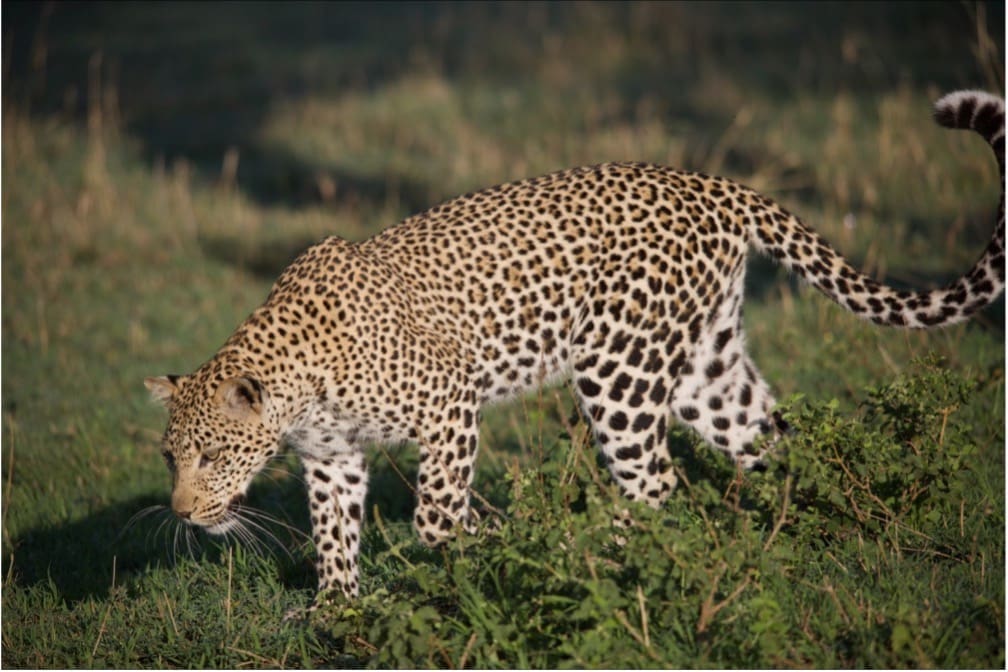
For so long, he was the shadow we strained to see. A flick of a tail in tall grass. A silhouette dissolved into dusk. The Sabora male has always carried caution like a second skin, keeping vehicles at a deliberate distance, never lingering long enough to fully belong to our view.
But February shifted something.
Drawn to Maridadi, he began to step into the open more often. Not boldly, not recklessly, but bravely in his own quiet way. When she lay at ease near vehicles, he watched. When she fed calmly, unconcerned by our presence, he seemed to study her composure. And little by little, he mirrored it.
He stayed longer.
Sat taller.
Allowed himself to be seen.
We did not witness mating, the bush guards such moments carefully, but what we observed was perhaps more telling. The Sabora male did not rush her. He did not pressurise or vanish. He moved at her rhythm, matching her pace with patience and steadiness. There was maturity in his restraint, strength in his calm persistence.
In many ways, February was not about a single dramatic event. It was about growth – subtle, powerful, undeniable. A young female stepping into adulthood. A cautious male learning to soften his edges. And the quiet possibility that new life may one day emerge from this chapter.
Out here, transformation never shouts. It arrives like dusk settling over the savanna, so gradually you hardly notice until you look up and realize the landscape has changed. February reminded us that the most meaningful milestones are often the quietest ones.
Download the full report